SSI, University Libraries celebrate Jesse Owens’ legacy 90 years after Berlin


by Noah Adkins
To much of the world, Jesse Owens is the four-time Olympic gold medalist who made history in Berlin.
To his grandchildren, he was simply Granddad.
The Sports and Society Institute and Ohio State University Libraries hosted “Running Against History: The Enduring Legacy of Jesse Owens” Friday at Thompson Library, marking 90 years since Owens won four gold medals at the 1936 Berlin Olympics.
Watch the Event Video
Presented in partnership with America 250-Ohio, the event explored Owens’ time at Ohio State, his experience at the Berlin Olympics and his impact on his family and generations of athletes who followed him.
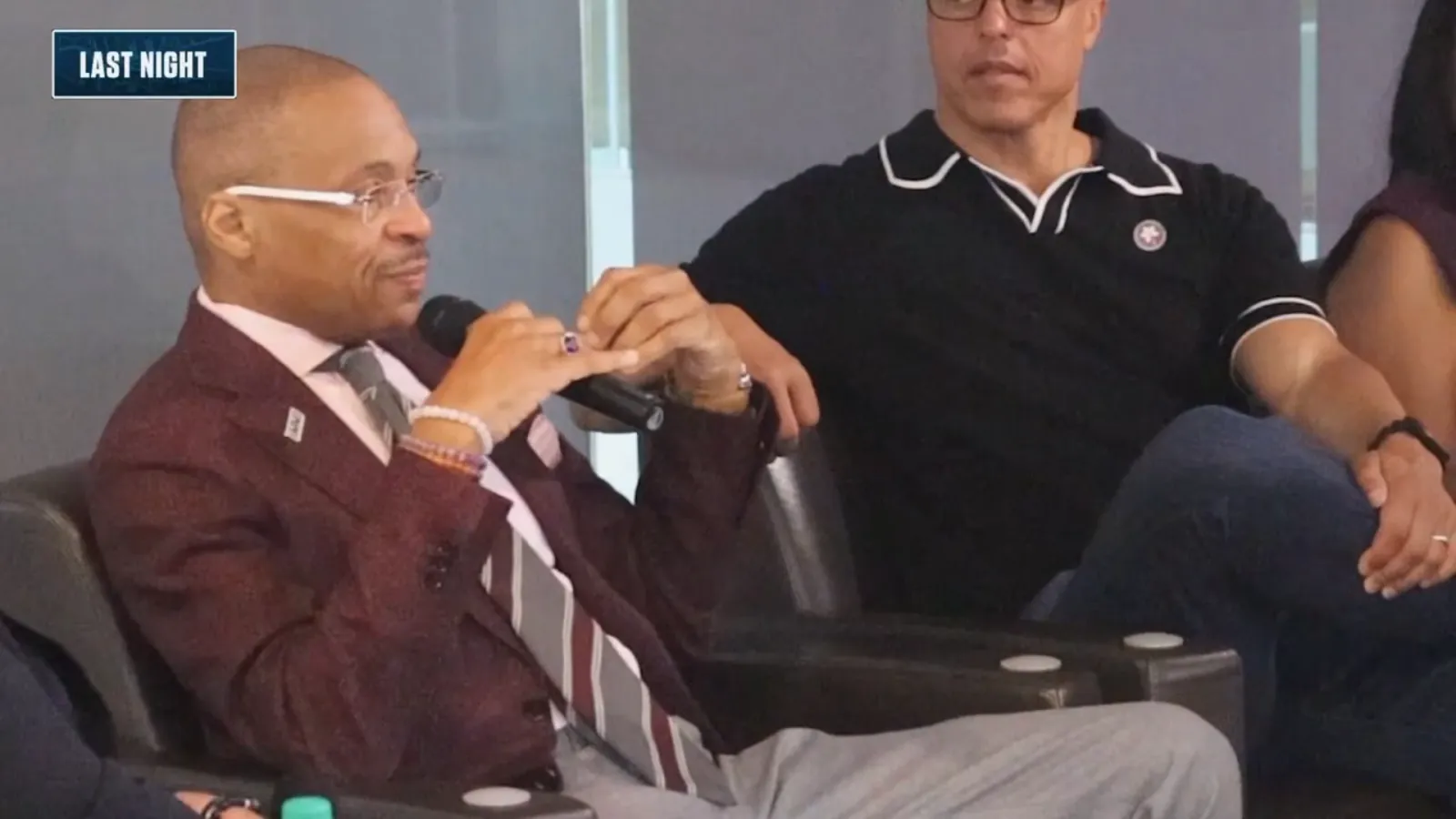
The panel featured Owens’ grandson Stuart Owens Rankin, granddaughter Marlene Hemphill Dortch, Olympic gold medalist Butch Reynolds, author Kevin Jones, Fox Sports broadcaster Gus Johnson and Ohio State track and field coach Rosalind Joseph.
Before the panel, John Davidson, a Germanic film expert and Ohio State’s faculty athletics representative, provided historical context for the 1936 Games.
Davidson said Berlin was awarded the Olympics before Adolf Hitler and the Nazi Party took power in 1933. Nazi leaders later saw the Games as an opportunity to control how Germany was presented to the world, he said.
“Everybody’s eyes are on your nation,” Davidson said. “You have the chance to control everything that’s seen, how it looks, how you represent yourself to the world.”
Davidson said there was considerable debate over whether the United States should participate in the Berlin Games, but the country ultimately sent a team.
Owens left Berlin with four gold medals, winning the 100- and 200-meter dashes, long jump and 4x100-meter relay.
But the panel emphasized that Owens’ story extended far beyond his Olympic victories.
Jones discussed the racism Owens faced in the United States before and after Berlin. While at Ohio State, Owens was not permitted to live in university dormitories and, when traveling with the team, could not eat with his white teammates at some restaurants.
“He handled it like the champ he was,” Jones said.
The discrimination continued after Owens returned from Berlin. Despite winning four gold medals, Jones said, Owens did not receive the same recognition or opportunities afforded to some other successful American athletes.
Decades later, Owens’ experience became part of what drew Reynolds to Ohio State.
Reynolds said he wanted to become more than a successful track athlete, and Owens’ ability to navigate adversity resonated with him.
“I’m going to go to Ohio State because I know that Jesse Owens came here, and I know how hard it is to be a Black man going through this adversity,” Reynolds said.
Reynolds later won a gold medal in the 4x400-meter relay at the 1988 Seoul Olympics.
Johnson said he first learned about Owens while growing up in Detroit. His father told him stories about Owens, boxer Joe Louis and baseball player Jackie Robinson and later brought home a signed photograph of Owens that Johnson still owns.
Years later, Owens inspired Johnson to begin referring to the Buckeyes during broadcasts as the “world-famous Ohio State Buckeyes.”
“I realized one day what a great contribution that I didn’t think was being represented well enough,” Johnson said. “So I decided that, in my mind, Jesse Owens made Ohio State world famous during that track meet.”
Joseph said today’s Ohio State track and field athletes generally know Owens and understand his significance before they arrive on campus.
“You know him because of what he impacts not only in sport, but just in legacy across the world,” Joseph said.
For Dortch and Owens Rankin, however, Olympic medals and world records were not what defined their grandfather.
“He certainly was a family man,” Dortch said. “What I do remember about him is that he loved us.”
Owens Rankin said his grandfather traveled frequently but always made time for his family and worked to provide them with opportunities he had not had himself.
“We knew him as Granddad, and that’s how we referred to him,” Owens Rankin said.
Dortch said Owens’ struggles after Berlin were significant, but they should not overshadow what came next in his life.
“Certainly, he did have well-documented struggles, but what I feel like doesn’t get communicated is that was not the end of his story,” Dortch said.
Owens later became a motivational speaker, traveling throughout the United States and around the world to share his experiences.
“He was able to persevere, and he was able to continue with integrity and character, and really was a trailblazer in how he was able to recreate himself at each turn,” Dortch said.
Today, Owens’ name is woven into Ohio State’s campus, including Jesse Owens Memorial Stadium, home to the Buckeyes’ track and field and soccer teams.
Owens Rankin said he hopes future generations remember the man behind those names.
“Don’t let it just become a name that becomes representative of that field or that building,” Owens Rankin said. “Keep the person behind the name alive.”
“Keep his memory alive,” he said. “Events like this are part of that.”