SSI, Department of Sociology discussion examines growing pressures in youth sports
By Noah Adkins
Travel teams, private coaching and year-round training are changing the youth sports experience, raising questions about cost, pressure and whether children still have room to simply play.
The Sports and Society Institute and Ohio State’s Department of Sociology explored those issues Oct. 6 at WOSU during “The Price of Play: Youth Sports, Pressure and the Professionalization of Childhood.”
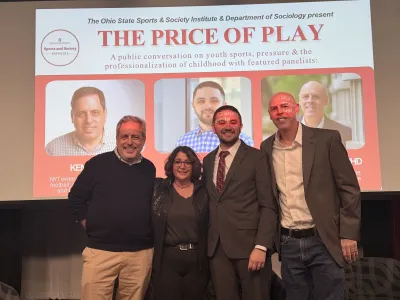
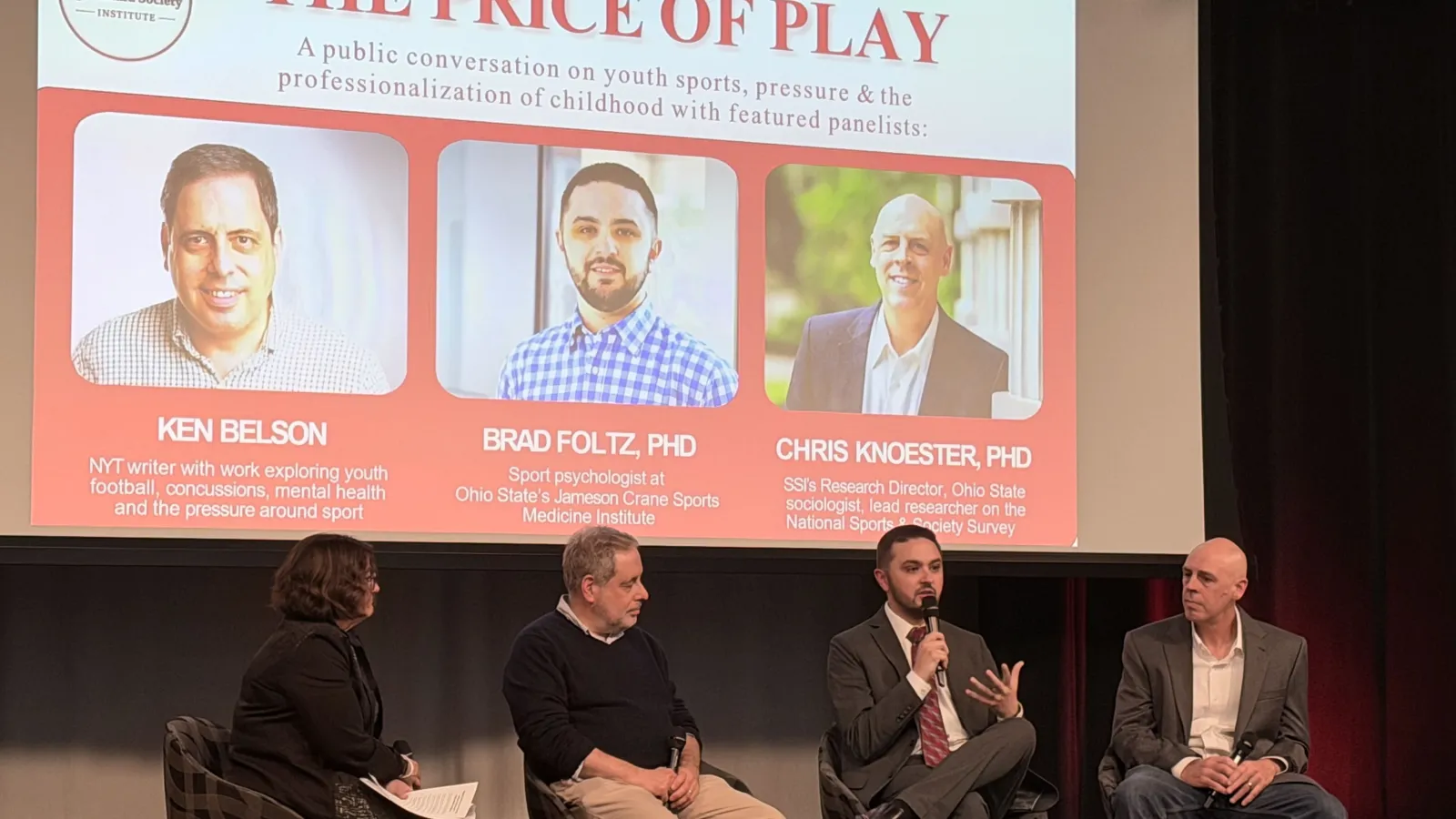
The panel featured Ohio State sociologist and SSI research director Chris Knoester, New York Times writer Ken Belson and Brad Foltz, assistant director of Sport Psychology and Wellness Services at Ohio State. It was moderated by SSI director Nicole Kraft.
Children Lose Control of Sports Experiences
Knoester said the growing emphasis on specialized training and competitive teams can leave parents feeling they must invest more time and money to give their children the same opportunities as other athletes. As parents, coaches and organizations become more involved, children can have less control over their sports experience.
“There’s a loss of child control and child-centeredness in the dynamics,” Knoester said.
Foltz said families may worry their children will fall behind if they take time away from a sport. That fear can push young athletes toward year-round training rather than taking a season off or trying something new.
The pressure can also shape how athletes see themselves. Foltz said athletic identity is one of the most common issues he discusses with athletes.
“We have 16-year-olds who will sit and say, ‘If I’m not good at this, I’m worthless. I’m nothing,’” Foltz said.
Injuries can compound those struggles. Foltz described working with a 15-year-old who had suffered four concussions and was experiencing problems with memory and reading. Despite those difficulties, the athlete’s mother wanted to know when he could return to competition.
When a sport becomes central to an athlete’s identity, stepping away can be especially difficult, Foltz said.
Parents can help by creating space for interests and conversations beyond sports. The car ride home or dinner after a game does not always need to become a review of what went right or wrong.
“Ask your child about something else,” Foltz said. “Go do something that’s not sport-related.”
Belson encouraged parents to give children a voice in deciding how much they want to commit.
“I’d start first by asking your kid, ‘Do you want to do this?’” Belson said. “Give the kid back some of the agency in this process.”
The cost of participation
The panel also examined how rising costs and changing opportunities affect access to youth sports.
Belson discussed the decline of recreational leagues as competitive and travel sports have become more popular, leaving fewer options for children who want to participate without joining a high-level team.
Knoester said access can depend on a family’s resources and the sport a child chooses. Schools often support football and basketball, while sports such as rowing, field hockey and lacrosse can cost families more.
“Talent is pretty diverse and widespread. Opportunities are not,” Foltz said.
Knoester said research shows more than 70% of people who participate in organized youth sports stop playing by age 18. He urged a greater focus on sustaining participation and creating positive experiences.
“Adopt an ethic of play for all, play for life,” Knoester said.
Keeping joy at the center
Foltz said sports should contribute positively to an athlete’s life rather than become an obligation.
“Sport was supposed to be additive to our lives,” Foltz said. “Sport was supposed to be a thing that brings joy, entertainment, engagement, whatever. And if it’s not doing those things, then we need to change our relationship with it.”
When he asks former athletes what they miss most about competing, Foltz said their answers usually center on friendships rather than victories.
“I can’t think of one that said I miss winning,” Foltz said.
Sports can teach resilience and perseverance, he said, but relationships often leave the strongest impression.
“I remember the people I was with,” Foltz said. “I remember the relationships. I don’t remember the result.”