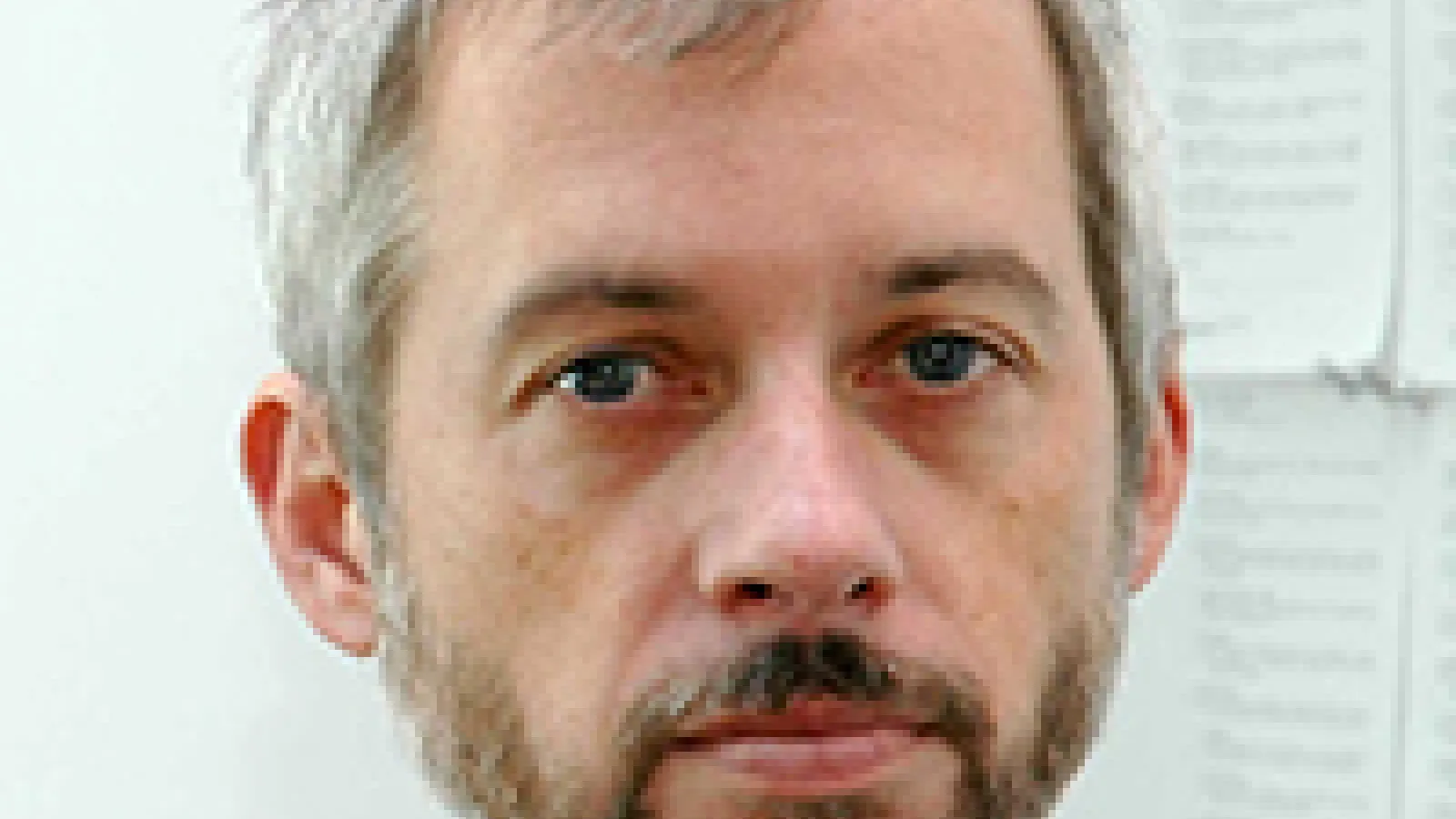
Architecture Professor Benjamin Flowers Becomes SSI Affiliate
By Reilly Cahill
Stadiums provide sports fans with an opportunity to cheer on their favorite teams and connect with others in an engaging atmosphere.
But the impact of stadiums extends far beyond game day.
Benjamin Flowers, the newest affiliate of the Sports and Society Institute, has spent years researching urban architecture and studying how buildings such as stadiums and skyscrapers shape society.
“I spent about 20 years looking at the impact of stadium design and stadium construction on cities,” Flowers said. “Part of it obviously means also spending a lot of time looking at the different ways in which sport and the practice of sport informs stadium design, but also more broadly how the social practice of sport informs so much of the way people think about stadiums and think about them distinct to other building types.”
Flowers earned a Ph.D. in architecture from the University of Minnesota and is the author of several books, including Sport and Architecture.
“The argument in that book is really that there are two social practices that are almost universal in spite of geographic differences, cultural differences, religious differences [and] linguistic differences, and those are the social practice of architecture and the social practice of sport,” Flowers said. “These are social practices in that they don’t exist by themselves in one individual. If you want to make architecture happen, you’ve got to be engaged with society. If you want to make sport happen, more or less, you have to be engaged with society as well.”
Flowers, a professor of architecture in the Knowlton School of Architecture within the College of Engineering, said stadiums have long connected sports and architecture throughout history.
“Sport and architecture are so powerfully intertwined, not just in our present moment, but throughout history,” Flowers said. “The stadium is one of the few typologies we have. It takes us back to the classical era into antiquity, and so it’s a very long history spanning several thousand years.”
Through his expertise in sports architecture, Flowers said he believes he can offer a perspective that will help support SSI’s continued growth.
“SSI has a strong strength in sociology, management, psychology and all the different disciplines that are represented by the College of Arts and Sciences,” Flowers said. “One aspect of it that it has an opportunity to grow in that it hasn’t necessarily in the past, is the question of how sport and architecture operate in the present moment.”
Flowers said he was excited to become an SSI affiliate because of the institute’s broad interdisciplinary approach to studying sports and society.
“Most equivalent kinds of bodies, if they exist at all, tend to be focused on one very narrow aspect of sport, most often sport management, on really the question of how to manage sport as an industry and questions like that,” Flowers said. “[It] tends to ignore the larger social and economic, in a broad sense, impacts of sport on society. I was really excited to find out that SSI existed and to have a chance to be a part of it.”